


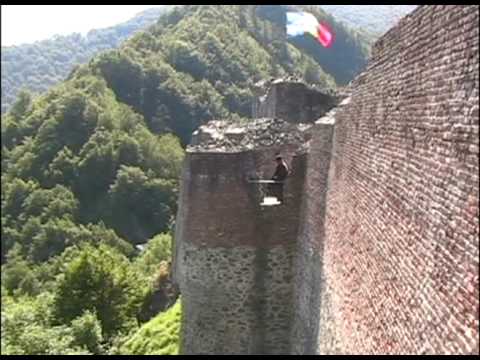
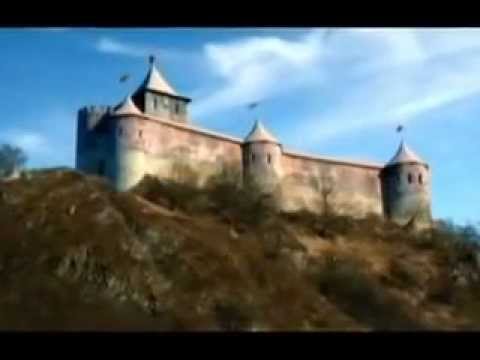


Is Poienari a castle or a fortress? Looking from downward it looks like a castle. But a castle is supposed to be a place for living. And nobody can find such place inside, just maybe only Vlad the Impaler. So, it’s a fortress. But it’s strange. Going up you’ll see it’s so small that 500 people hardly can find a place without treading on each other feet. So, being too small and too high from the road, it can’t be only a defense fortress. But its position drives us to think at a frontiers watching fortress.
Poenari Castle is located on the right side of the Transfăgărăşan road in Argeş County, on a cliff near a canyon formed on the Argeş River valley, close to the Făgăraş Mountains. Driving on the Transfagarasan road from Curtea de Arges, beyond the last village on the route, the Poienari fortress suddenly appears, almost unreal, hanging on a cliff. And you think: “Wow! I have to see this. To touch it!” It doesn’t matter if you know it’s a Dracula real eagle’s nest or not.
The first Romanian kings of Wallachia built the Poenari fortress in the early 13th century. At the beginning they built the rectangular tower and then the fortress was expanded to maximum during Vlad the Impaler time. Around the 14th century, it was the main citadel of Wallachian kings. In the next few decades, the name and the residents changed a few times but eventually the castle was abandoned and left in ruins. In 1888, a landslide brought a portion of the fortress crashing down the cliff, but otherwise the structure has been mildly maintained and can still be visited today. The first written proof of its existence is a document from 1453 where the Hungarian king Ludovic the 5th asked the Sibiu people to repair the fortress in order to use it against the Turks’ attacks. Also in the 15th century, Vlad the Impaler, famous as Dracula, noticed the huge potential for a fortified castle in such position. He repaired and consolidated the structure, making it one of his main fortresses.
Although the castle was used for many years after Vlad’s death in 1476, it eventually was abandoned again in the first half of the 16th century and was in ruins by the 17th century. Due to its size and location, control of the castle was difficult to take, even by natural forces. Nonetheless, the castle was slightly repaired and the walls and its towers still stand today. To reach the castle, visitors need to climb 1,480 steps.
During the Communist era in Romania, foreign visitors sometimes spent the night inside the castle ruins. Claims that the Poenari Castle would be the “real” Castle Dracula as featured in Bram Stoker’s famous Dracula novel have no basis in Stoker’s book. Stoker never heard of the Poenari Castle. It is around 200 km away from the novel’s place of action in the north-east corner of Transylvania. As discovered by the Dutch author Hans Corneel de Roos, Stoker’s own handwritten research notes confirm that the novelist had a specific location in that region for the Vampire’s stronghold in mind while writing his novel: an empty mountain top 2,033 m high, located in the Transylvanian Kelemen Alps near the former border with Moldavia.
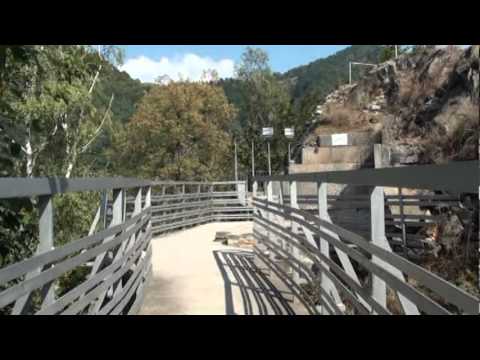
Arriving near the fortress, tourists have to leave the vehicles at the mountain base near the road. Up to the fortress there is a 1480 step staircase, to reach the top. So, those who have heart or breathing problems, shall think twice. But definitely everybody shall not forget to take the camera. The view is marvelous on a clear day, but anybody must look closely to the clouds if it’s not a clear day. It’s an area where the weather changes fast. If the clouds are down and compact and move from the mountains to Curtea de Arges and you still want to climb to the Poienari fortress, your experience will be somewhat different but still memorable.
You’ll have all the chance in the world to find yourself in the middle of a kind of “twilight zone”. It’s a bad thing for the view because, depending on the cloud’s density, you’ll have only a few meters/feet of visibility. This, of course, is good for your imagination about vampires and ghosts – but don’t expect to find such things in the real world of the castle.
As you climb the stairs the light finds its way through the trees with more difficulty. Pay attention to the shadowed stairs because they are not in the best shape. Before 1972, when the stairs were built, it was only a hidden trail here.At the top, you must pay the tribute (entrance fee) to the fortress “guardian”. But, please, don’t ask him about ghosts and vampires because he gets angry. Ask him instead about the castle’s legends and let him tell you in his own way…
The legend of fortress’ construction by Toma’s Sunday
It is said that a large number of landowners and merchants weren’t satisfied with the manner in which Vlad the Impaler ruled. They formed a conspiracy to catch the ruler and sell him to the Turks. However, Vlad Dracula found out about this plot, planned his own vengeance and acted first.
On Easter Day in 1457 he invited them all to his Targoviste Court to enjoy the holiday. He then trapped them at the religious service in the church and forced them to walk to Poienari. Once there, he raised his sword toward the old fortress ruins and ordered them to repair and consolidate those ruins by Toma’s Sunday (the first Sunday after Easter Day).
It’s hard to believe this can be the truth, but the legend says that the people preferred hard work to dying on a stake. Lots of them lost their lives there but they finished the construction by Toma’s Sunday, as ordered. All those alive were forgiven by Vlad Tepes because he decided they’d learnt their lesson.
The Vlad Tepes escape legend
When the Turks attacked the Poienari Fortress it is said that Vlad the Impaler’s wife threw herself from the fortress walls. Vlad escaped through a secret passage (nobody has ever found it) and arrived in Arefu (the nearby village). The villagers advised him to invert the horseshoes and showed him the mountains trails where he could find safety. As a reward, Vlad Dracula gifted the Poienari surrounding lands to those villagers. In fact, you can see the donation agreement written on a rabbit skin at the National Museum of Romanian History in Bucharest. He gave them 5000ha/12500acres of wood.
Even without its bloody historic ties, Poenari Fortress, would be a majestic, exciting place to explore on its own merit. Architecture buffs would marvel at the 13th century mortar work, lovers of fantastic scenery would find the cliffside view mind-blowing. Poenari Fortress doesn’t need a sordid story to be spectacular, but it happens to have that as well.
The story is a legendary one and to many, a confusing mixture of truth, history, legend, and fiction due to the convolution between the novel “Dracula” and the factual history of Vlad III Dracula “The Impaler”, whose name inspired the book. Bram Stoker modeled some of his main character on the more basic facts about Dracula’s actual life, but his knowledge of Romanian history and the true story of Vlad the Impaler remains suspect.
The true Dracula, (Turk-impaling Prince of Wallachia as opposed to the sultry blood sucker) fell in love with Poenari Castle in the 15th century, and realizing its potential as a major stronghold with an amazing vantage point, consolidated and fixed up the crumbling fortress, making it one of his main places of residence. It’s said that his first wife, Jusztina Szilagyi of Moldavia, flung herself from the towers of Poenari during a siege by Vlad’s muslim brother, Radu Bey. Before flinging herself into the Arges River below, she exclaimed she would rather rot and be eaten by the fish than to be a captive of the Turks.
In the end the walls of Poenari would not keep Vlad the Impaler safe, but it was not the fortress that failed him. Vlad’s brother Radu cel Frumos was given the daunting task of leading the Ottoman Empire to victory, which positioned him directly at odds with his infamously brutal older brother. While Vlad could not be defeated in battle, his habit of alienating allies and undermining their authority became his downfall. After running out of money for his mercenaries, he went to his supposed friends for help, and they quickly betrayed him, and had him arrested for high treason. While he managed to untangle himself and went on to declare a third reign, it was an uphill battle that eventually killed him, and he never returned to his castle on the mountains.
Este Poienari un castel sau o cetate? Privind de jos arata ca un castel. Dar un castel este un loc in care se locuieste. Si nimeni nu poate gasi un asemenea loc in interior, decat probabil doar Vlad Tepes. Deci, este o cetate. Dar e ciudat. Pe masura ce veti urca veti descoperi ca este atat de mica incat cu greu 500 de persoane pot gasi un loc unde sa stea fara sa se calce pe picioare. In concluzie, fiind atat de mica si atat de sus fata de drumul de acces, nu poate fi decat o cetate de aparare. Dar pozitia sa ne duce cu gandul catre o cetate de paza a frontierei.
Cetatea de la Poenari este localizata pe partea dreapta a Transfăgărăşanului in judetul Argeş, pe o stanca langa un canion format pe valea raului Argeş, in apropierea muntilor Făgăraş. Conducand pe Transfagarasan de la Curtea de Arges, dincolo de ultimul sat de pe traseu, cetatea Poienari apare deodata, aproape ireal, agatata deasupra stancilor. Probabil veti exclama: “Wow! Trebuie sa ajung aici. Sa o ating!” Nu conteaza daca stiti sau nu ca aici se afla adevaratul cuib de vulturi al lui Dracula.
Primii voievozi valahi au construit cetatea Poenari la inceputul secolului 13. La inceput ei au construit turnul rectangular iar apoi cetatea a fost extinsa la maximum in timpul lui Vlad Tepes. In secolul 14, a fost principala fortareata a regilor Valahiei. In urmatoarele decade, numele si locatarii s-au schimbat de cateva ori dar eventual castelul a fost abandonat si s-a ruinat. In 1888, a alunecare de teren a produs prabusirea unei parti din cetate de pe stanci, insa altfel structura a fost pastrata aproape integral si poate fi vizitata in prezent. Prima dovada scrisa despre existenta cetatii este un document din 1453 in care regele ungar Ludovic al 5-lea a cerut locuitorilor din Sibiu sa repare cetatea pentru a o folosi impotriva atacurilor turcilor. De asemenea in secolul 15, Vlad Tepes, devenit faimos ca Dracula, si-a dat seama de potentialul imens pe care il reprezenta un castel fortificat in asemenea pozitie. El a reparat si consolidat structura, facand-o una din principalele sale fortarete.
Desi castelul a fost folosit pentru multi ani dupa moartea lui Vlad Tepes in 1476, ar fi fost eventual abandonat din nou in prima jumatate a secolului 16 si lasat sa se ruineze in secolul 17. Datorita marimii si pozitiei sale, controlul castelului era dificil de exercitat, chiar si prin forte naturale. Oricum, castelul a fost semnificativ reparat si zidurile si turnurile sale inca sunt in picioare. Pentru a ajunge la castel, vizitatorii trebuie sa urce 1.480 trepte.
In perioada comunista in Romania, vizitorii straini uneori isi petreceau noaptea printre ruinele castelului. Revendicarile privind faptul ca fortareata de la Poenari ar fi “adevaratul” Castel al lui Dracula asa cum este descris in celebra nuvela a lui Bram Stoker, Dracula, nu au nici o baza in cartea lui Bram Stoker, care nu a auzit niciodata despre cetatea de la Poenari. Aceasta se afla la aproximativ 200 km departare de locul actiunii romanului Dracula situat in nord-estul Transilvaniei, in pasul Bargaului. Asa cum a fost descoperit de biograful olandez Hans Corneel de Roos, notitele de mana ale lui Stoker confirma ca scriitorul irlandez a avut in minte o locatie specifica in acea regiune pentru castelul vampirilor in timp ce isi scria romanul care l-a facut celebru: un varf de munte gol la inaltimea de 2,033 m, localizat in Carpatii Transilvaniei langa fosta granita cu Moldova.
Sosind langa cetate, turistii trebuie sa isi lase vehiculele la baza muntelui langa sosea. Pana sus la cetate sunt de urcat 1480 de trepte, pentru a ajunge in varf. Deci, cei care au probleme de respiratie sau de inima, vor trebui sa se gandeasca de doua ori inainte de a urca. Insa in mod clar nimeni nu trebuie sa uite sa isi ia aparatul de fotografiat. Privelistea este superba intr-o zi senina, insa oricine trebuie sa ia in considerare si miscarea norilor in special daca nu este soare. Aici este o zona in care vremea se schimba rapid. Daca norii sunt josi si compacti si se misca dinspre munti spre Curtea de Arges si inca doriti sa urcati catre cetatea Poienari, veti avea o experienta oarecum diferita dar totusi memorabila.
Veti avea ocazia sa va aflati in mijlocul unei “zone crepusculare”. Vizibilitatea va fi foarte scazuta, si in functie de densitatea norilor, veti avea doar cativa metri de vizibilitate. Insa aceasta atmosfera, desigur, este buna pentru a va stimula imaginatia despre vampiri si fantome – insa sa nu va asteptati sa gasiti asemenea lucruri in lumea reala de la castel.
Pe masura ce urcati treptele spre cetate, lumina isi gaseste drumul printre copacii desi, cu tot mai multa dificultate. Trebuie sa fiti atenti la treptele intunecate deoarece ele nu sunt in cea mai buna forma. Inainte de 1972, cand aceste trepte au fost construite, aici era doar o carare ascunsa. La intrarea in cetate, trebuie platita o taxa de intrare catre “paznicul” cetatii. Dar, va sfatuim sa nu il intrebati despre fantome si vampiri deoarece se poate enerva. Mai bine il intrebati despre legendele castelului si lasati-l sa va povesteasca in felul lui…
Legenda construirii cetatii in Duminica Tomei
Se spune ca un mare numar de boieri si negustori nu erau multumiti de modul in care Vlad Tepes domnea. Ei au format o conspiratie pentru a-l prinde pe domnitor si a-l vinde turcilor. Oricum, Vlad Dracula a aflat despre acest complot, si-a planificat razbunarea si a actionat primul.
In ziua de Paste in 1457 el i-a invitat pe toti la curtea domneasca din Targoviste pentru a sarbatori impreuna. Acolo i-a atras in biserica la slujba religioasa si i-a fortat sa mearga pe jos pana la Poienari. Odata ajunsi acolo, Vlad a ridicat sabia aratand catre ruinele vechii cetati si le-a ordonat sa repare si sa consolideze aceste ruine pana in Duminica Tomei (prima Duminica dupa Paste).
E greu de crezut ca acesta ar fi adevarul, insa legenda spune ca cei care au complotat au preferat sa lucreze din greu decat sa moara infipti in teapa. Multi dintre ei si-au pierdut viata in timp ce lucrau insa pana in duminica Tomei lucrarile de constructie au fost finalizate, asa cum a ordonat Vlad Tepes. Toti cei care au ramas in viata au fost iertati de Vlad Tepes deoarece el a considerat ca si-au invatat lectia.
Legenda evadarii lui Vlad Tepes
Cand turcii au atacat cetatea de la Poienari se spune ca sotia lui Vlad Tepes s-a aruncat de pe zidurile cetatii decat sa ajunga prizoniera turcilor. Vlad a scapat printr-un tunel secret (care nu a fost descoperit niciodata) si a sosit in Arefu (satul invecinat). Satenii l-au sfatuit sa puna invers potcoavele cailor si i-au aratat niste poteci ascunse in munti unde putea sa fie in siguranta. Ca recompensa, Vlad Dracula le-a daruit satenilor terenurile din imprejurimile cetatii Poienari. Aceasta donatie s-a concretizat printr-un act de donatie scris pe o piele de iepure care se afla la Muzeul National de Istorie a Romaniei din Bucuresti. Prin acest act Vlad Tepes le-a daruit 5000 ha de padure.
Chiar si fara legaturile sale istorice sangeroase, cetatea Poenari, este un loc impresionant, si interesant de explorat si merita ajuns aici. Pasionații de arhitectură vor fi uimiti de lucrarile realizate cu mortar in secolul 13, iar iubitorii de locatii fantastice vor considera privelistea de pe stancile unde se afla cetatea Poienari, deosebita. Cetatea Poenari nu are nevoie de o poveste fabricata pentru a fi o locatie spectaculoasa, dar s-a intamplat sa aiba parte si de asa ceva.
Povestea este una legendara, si, pentru multi, reprezinta un amestec confuz de adevar, istorie, legenda, si fictiune datorata paralelei dintre romanul “Dracula” si istoria vietii lui Vlad III Dracula “Tepes”, al carui nume a inspirat cartea. Bram Stoker si-a modelat unele din principalele sale personaje inspirandu-se din faptele din viata celui denumit Dracula, insa cunostintele sale despre istoria Romaniei si despre adevarata istorie a lui Vlad Tepes sunt superficiale si chiar dubioase.
Adevaratul Dracula, (Voievodul Valahiei care ii tragea in teapa pe turci in contrast cu sangerosul bautor de sange) s-a indragostit de cetatea Poenari in secolul 15, si realizand imensul potential de fortareata cu o locatie excelenta, a consolidat si reparat zidurile surpate ale fortaretei, transformand-o in una din principalele sale resedinte. Se spune ca prima sa sotie, Iustina Szilagyi a Moldovei, s-a aruncat din unul din turnurile cetatii Poenari in timpul unui asediu din partea lui Radu cel Frumos, fratele lui Vlad convertit la islamism. Inainte de a se arunca in raul Arges care curgea pe langa cetate, ea a exclamat ca mai bine putrezeste sau e mancata de pesti decat sa fie captiva la turci.
Pana la urma zidurile cetatii Poenari nu l-au ajutat pe Vlad Tepes sa ramana in viata, dar nu din cauza acestei cetati a murit. Fratele lui Vlad, Radu cel Frumos a primit sarcina de a conduce Imperiul Otoman catre victorie, ceea ce l-a facut sa se pozitioneze ca dusmanul direct al fratelui sau mai mare “infam si brutal”. In timp ce Vlad nu putea fi invins in lupta, obiceiul sau de a se indeparta de aliati si de a le submina autoritatea i-au cauzat caderea. Dupa ce a ramas fara bani pentru a-si plati mercenarii, el a mers la cei pe care ii considera prietenei pentru ajutor, insa acestia l-au tradat imediat, si l-au arestat pentru inalta tradare. In timp ce reusise sa scape din inchisoare si sa se domneasca pentru o scurta perioada pentru a treia oara, in timpul unei lupte pe un deal fiind departe de soldatii sai pentru a savura victoria, se presupune ca a fost ucis, si nu s-a mai intors niciodata la cetatea lui din munti.
One Response
Leave a Reply
| Home | Bucharest | Dobrogea | Moldova | Wallachia | Transilvania |
|---|---|---|---|---|---|


Destul adevar, un pic de legenda amestecata cu un pic de fictiune si un bogat documentar. Felicitari.